
 Twitter
 Facebook
 Flickr
 Youtube


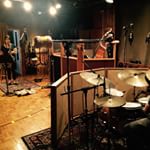





 I am writing this post in acknowledgment that I may have an outdated idea of what “producing” a musician may mean. And would like your feedback & help on correcting my perspective if you think I am wrong? Because somethings seem to have changed when it comes to what it takes today to call yourself a “Producer” of music.
To me “producing” an artist means impacting the artists creation in a way where the final product could have never ended up this way without you – the producers – input. I am talking artistically.
Here’s what “producing” is definitely NOT (to me):
– You booked the hotel rooms.
– You picked the artist up in the airport and paid for his Starbucks on the way to the studio.
– You paid for the recording or got him the deal with the label.
– You provided the space for the recording.
– You suggested the recording be done to the artist.
– You suggested that the artist consider using an established “star” on the recording, instead of the band he would have preferred, in order to satisfy market demands as you see them. And the artist relented, feeling that otherwise the recording might not happen.
– You picked a take over another (although now we are starting to get to the meat and potatoes).
– You suggested a song (although now we are also getting closer).
All of the above are honorable and necessary functions. And one can take pride in them, no doubt. But they are not “producing” – to me at least. They could be/is part of executive producing, however.
Remember the good old days of the REAL producers? They were brand names in and of themselves, recognized for how deeply they impacted the artists they worked with – in artistic ways. Phil Spector (crazy as he is) and his wall of sound. George Martin with The Beatles. Quincy Jones & Michael Jackson.
Marcus Miller with Miles. When Marcus Miller did “Tutu” with Miles, he made a recording that Miles himself could have never conceived of. He put Miles into an artistic environment that enabled Miles to shine with his unique genius. Now, mind you, Marcus did more than that on Tutu..he also basically played all the rest of the instruments, composed several of the songs etc etc. He IS a sort of super-producer, or at least has incredible talents in many fields. So I don’t think you have to be THAT gifted to call yourself a producer. But it helps! And Marcus was able to put his sound and a style onto so many recordings from Miles to Sanborn to Luther Vandross to Aretha Franklin to Wayne Shorter…the list is endless, really.
To me although being a producer is not a protected title it SHOULD be. You shouldn’t be able to run around and call yourself a producer without substantial merit to prove it. It is a serious thing – especially if you love music – to suggest that you had a substantial impact on an artist and his creation. Because the artist him- or herself has spend a lifetime working on and thinking about her/his art. Even if you love this artist and did your very best to put this artist in a great environment, and take immense amount of pride in your work, you can still do that without overreaching and claiming yourself to be the producer of said artist.
I don’t know exactly where to draw the line. I don’t necessarily feel there’s a hard and fast rule, because different artists & different projects require different inputs. If Nirvana was totally going to do another electric album, and you were the one that said “why don’t we do it completely unplugged”, convinced them to do so and you also helped pick the songs, I guess that is producing them to a large extent. Even though if your input sort of stopped there, it’s a little light, to me, on the “producing” scales.
One could suggest that the rule would be to get an artist to actually support you in your claim to having had such substantial impact. But, you know, not all artists are always gracious, and there could be a financial incentive to not acknowledge this as producers are/were often paid a “producer royalty” + a fee recoupable from the artists budget/deal.
Miles Davis, for instance, never did want to call Teo Macero his “producer”, even though many feel that Teo probably part composed “Bitches Brew” by editing many hours of music into a final form that had a composed feeling to it. He also added sound effects, at least supposedly, that altered Miles sound & the overall sound of the album. Teo didn’t just engineer the album – he had an impact that went far beyond that. I think that is generally acknowledged. And, to me, that would at least deserve a title of “Associate Producer”. But for Miles I guess he was tired right then of people saying that HE didn’t make his own music, that it was driven by other people (that was what many said about Wayne, Herbie and Tony’s input into the 2nd quintet), and he wanted to take claim to his own music…who can really blame him for that? Herbie certainly always said that Miles was the one who centered the 2nd great quintet. Teo may just have produced Miles at the wrong place and the wrong time to get the credit because of that history.
Personally I can only come up with this one way of defining a producer that to me satisfies what it SHOULD be: To impact the artistic end product in a substantial and direct way where the totality or major part of the creation is affected in direct ways by your input. And in such a way where the artist likely just really could not have done this himself. You literally have a SOUND on the recording, even if you do not play any of the instruments. That is your creation, you “played” the music that way, you are a hidden band member.
Now I’d love to hear what YOUR idea of a producer is? And who some of your favorite producers are?


Very interesting article. What was the inspiration for writing it? I think that all recording artists should have a producer that they trust and can work with. Someone who they know is in their corner but won’t sugar coat anything, just to be in the studio. It helps to cut the wheat from the chaff hopefully.
Thank U Jeff! These are thoughts that have been brewing for years. I have reverence for the true producers. I would aspire to have that kind of artistic weight, and bring that to the table on projects that I get involved in.
In jazz most people are their own producers. Some do a great job of it, some perhaps not so much. It’s true many could be helped by a producer – but only if it’s the right one. And those seem to be fewer and fewer and farther and father between! Perhaps because the field is getting inundated with well-meaning amateurs…just like journalism. ;-)
Well-meaning amateurs, that’s a good expression. The main problem I see is the whole value chain of music more and more cuts out the documented audio experience. Yes, people still go to concerts. And yes, people are said to consume music more than ever before. But the circumstances are completely different. Due to reasons we all know very well, the consumer’s value of an audio recording is like zero.
And here comes the producer point. We at col legno desperately try to influence our artists and recordings as much as we can. But at the end of the day you crash into today’s economic reality and have to align your time and efforts very carefully.
Unless we find a way to earn enough money back to make our living, the way of producing you describe above is more and more disappearing.
As a label, beside the “producer role”, we offer two aspects to both musicians and the audience: our trusted choice of extraordinary music, and an unique way of presenting it.
Thanks for your reply Mike! No doubt that the financial difficulty of releasing music is cutting into the ability to hire great producers. That said, it was never easy to release music and make money. Even then the labels of the day seemed to feel a great producer could add value that could HELP the monetization as well as the artistic end-product. Sure, producers will have to adjust to todays world in terms of what deals they can expect, too. But I am just lamenting the fact that it seems like there are less and less great, REAL producers out there!
The budget situation is one side (in the bigger pop business there are of course real producers, some of them quite good), but especially in smaller genres like jazz / world etc., musicians are not only forced to record themsleves with small budgets, but they also like the idea to have control about their sound.
The producer is the musician in the background, and there need to be trust between all of these people. If you like the sound of ECM and have the chance to, one will work with Manfred Eicher and love it. But in a smaller environment, some musician colleagues or sound engineers are “producing” a record. I guess the whole job “producer” disappeared at the same time as the recording procedure became easier and cheaper.
There is a newly made documentation about Karajan, presented a couple of months ago. It shows a lot of his recording with Berlin Phils. Simply amazing how much time they had to work on one record, how many people were involved off stage. And of course there were always at least one producer!
Thanks Mike – sounds great with the Karajan documentary!!! I will definitely watch this!